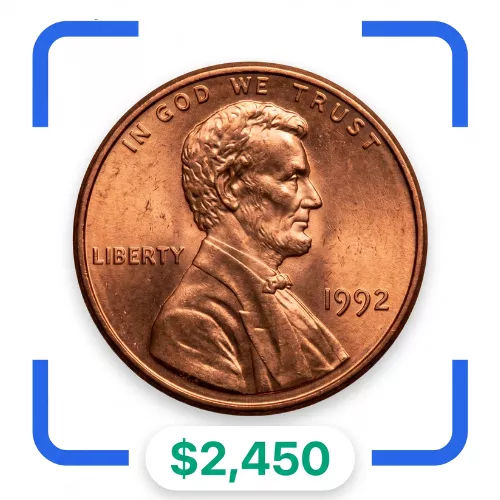
Is Your 1903 Dime the Valuable Key Date?
The 1903-S (San Francisco) is one of the most sought-after dates in the entire Barber series. With only 613,300 minted, it commands serious premiums in every grade. Run through this quick check to see if you're holding a key date.

🔵 Common Philadelphia (No Mint Mark)
- No letter below the bow on reverse
- 19.5 million struck — readily available
- Worth $3–$40 in most circulated grades
- Gem MS65+ can reach $700–$7,000
🔑 Valuable San Francisco (S Mint Mark)
- Small "S" below the bow on reverse
- Only 613,300 minted — key date
- Worth $85–$100+ even heavily worn
- Gem MS65 can reach $3,500–$22,500
Check all four that apply to your coin:
Describe Your 1903 Dime for a Detailed Assessment
Type what you see — our keyword analyzer will match your description to known varieties and give you a tailored value estimate.
Mention these things if you can:
- Mint mark (S, O, or none)
- LIBERTY readability in headband
- Presence of mint luster
- Any visible doubling in the date
- Off-center or broadstruck appearance
Also helpful:
- Any PCGS/NGC grade or holder
- Surface color (toned, white, original)
- Whether it's been cleaned
- Strike quality (sharp vs. weak)
- Any edge or planchet irregularities
Skipped the calculator?
Get a precise value estimate in seconds — just pick your mint, grade, and any errors.
Free 1903 Barber Dime Value Calculator
Follow the three steps below to get your estimated value range.
Step 1: Select Mint Mark
Step 2: Select Condition
Step 3: Any Known Errors? (optional)
If you're not sure about mint marks or grades yet, a 1903 Barber Dime Coin Value Checker online tool can help you identify your coin from a photo before using this calculator.
What's in This Guide
Jump to any section:
The Valuable 1903 Barber Dime Errors & Varieties
The 1903 Barber dime series produced several documented die varieties and striking errors that command premiums beyond the coin's base value. Mint production methods of the era — with hand-punched dies and mechanical collar presses — created opportunities for doubling, misaligned strikes, and planchet irregularities. Below, each variety is examined in detail, ranked by collector demand and market premium, with specific diagnostic features to help you identify what you have.

1903-S Key Date
The 1903-S is the undisputed key date of the 1903 Barber dime issues. The San Francisco Mint struck only 613,300 dimes that year — the third-lowest production total in the entire Barber series, which ran from 1892 to 1916. Low mintages at this level almost always translate into long-term collector demand at every grade level.
To identify the 1903-S, flip your coin to the reverse and locate the small "S" mint mark directly below the bow of the ribbon wreath. On heavily worn examples, this letter can be faint; a 10× loupe is recommended for confirmation. The obverse design is identical to all other Barber dime issues — Liberty facing right with the word LIBERTY on her headband.
Collector demand for the 1903-S is described as "considerable in every grade" by major price guides. Even in heavily worn Good-4 condition, examples trade for $85–$100. In Fine, values jump to $350–$525. Mint State examples are scarce and carry strong premiums, with NGC and PCGS prices for MS67 reaching $15,500–$22,500. Professional grading is essential for any example in circulated or better condition.

1903-O New Orleans Condition Rarity
The 1903-O Barber dime presents one of numismatics' most instructive lessons: high mintage does not guarantee availability in high grades. With 8,180,000 struck at the New Orleans Mint, this coin is common in circulated grades — but it spent most of the early twentieth century in active pocket change, emerging in high grades only rarely.
The New Orleans Mint was known for inconsistent die preparation and strike quality. On the 1903-O specifically, weakness often appears on Liberty's hair detail above the forehead and on the eagle's breast feathers on the reverse. A sharply struck 1903-O — where every hair curl above the LIBERTY headband is crisp — is the exception, not the rule, and commands a meaningful premium even within the same numeric grade.
In circulated grades through Fine, the 1903-O trades near $5–$35. In MS62–MS64, values escalate rapidly to $350–$1,000 due to the scarcity of well-struck, original-surface examples. In MS66, PCGS describes this coin as a "significant condition rarity," with only a handful certified at that level. The MS67 is considered the absolute finest known, with an auction record of $20,700 at Stack's in 2006.

1903 FS-301 Repunched Date (RPD)
The 1903 FS-301 Repunched Date is a documented die variety listed in the Cherrypickers' Guide to Rare Die Varieties. This error occurred when a mint worker punched the date logotype into the working die more than once, with the second impression landing at a slightly different position. The resulting die produced coins showing ghost impressions or doubling on one or more date digits throughout its working life.
To identify the FS-301, examine the date "1903" under at least 10× magnification, looking for secondary impressions particularly on the "1" and "9" digits. You may see a shelf of metal or a faint secondary numeral outline offset slightly from the primary digit. On high-grade examples, the repunching is distinct and unmistakable; on worn coins, the secondary impression may be partially obliterated by wear but should still show as a thickening of specific digit strokes.
The premium for this variety reflects its specialist appeal rather than dramatic rarity. In lower circulated grades, the FS-301 adds roughly $25–$75 over base Philadelphia dime value. In VF to EF condition, premiums reach $100–$200. Mint State examples with bold, clearly visible doubling can fetch $300–$500 or more. An AU-53 Details example sold for $61.20, illustrating that problem coins still attract specialist interest.

1903 Off-Center Strike Error
An off-center strike occurs when a planchet enters the striking chamber without being properly centered between the dies. The result is a coin where one portion of the design is missing entirely, replaced by a blank crescent of unstruck metal. This type of error has fascinated collectors for generations precisely because it so dramatically violates what a coin is supposed to look like.
Value increases dramatically with the degree of misalignment. A minor 5–10% off-center strike with the full date visible is worth $75–$150. Pieces that are 15–25% off-center command $200–$400. The most dramatic and valuable examples — 30% or more off-center while retaining the full date — can reach $500–$1,000 or higher. The date must always be fully visible for maximum value; a coin where the year is cut off loses most of its premium.
On Barber dimes specifically, off-center errors are scarce because the Mint's mechanical processes were well-controlled by 1903 — making any surviving example a genuine rarity that defied quality control. Strike percentage, date visibility, and coin grade all factor into final realized value at auction or dealer sale.

1903 Broadstruck Error
A broadstruck error occurs when a planchet is struck without the restraining collar that normally holds the coin's diameter to exactly 17.9mm and forms the reeded edge. Free from this constraint, the metal spreads outward during the strike, creating a coin that is larger in diameter, thinner in cross-section, and lacks any reeding on its edge. The design itself is complete but distorted toward the margins.
Identifying a broadstruck 1903 dime requires measuring the coin's diameter against the standard 17.9mm — a broadstruck example will noticeably exceed this. The edge will be smooth or only partially reeded, and the coin may appear slightly concave across its face. All design elements remain present, which distinguishes broadstrikes from off-center errors where design is missing entirely.
Broadstruck 1903 dimes are genuinely scarce, making them desirable among error specialists. Circulated broadstrikes bring $150–$300. Very Fine to About Uncirculated examples with strong luster command $350–$600. Mint State broadstruck errors — which survived the Mint's quality control and subsequent commerce without significant wear — are rare and can fetch $700–$1,200 depending on eye appeal and grade.
Think you've spotted one of these errors?
Use the free calculator to get a value estimate based on your specific mint, grade, and error combination.
Get My Error Coin Value →1903 Barber Dime Value Chart at a Glance
Values below represent problem-free, uncleaned examples. For a full step-by-step 1903 Barber dime identification walkthrough with detailed photo references, see this comprehensive 1903 dime reference and identification guide. All ranges drawn from NGC, PCGS, and recent auction data.
| Variety | Worn (G–F) | Circulated (VF–AU) | Uncirculated (MS60–63) | Gem (MS64–67) |
|---|---|---|---|---|
| 1903-P (No Mark) | $3 – $10 | $25 – $115 | $160 – $275 | $350 – $7,250 |
| 1903-O (New Orleans) | $5 – $35 | $70 – $175 | $350 – $1,000 | $1,000 – $15,000+ |
| 1903-S (San Francisco) ⭐ | $85 – $525 | $800 – $1,025 | $1,700 – $2,650 | $3,500 – $22,500 |
| 1903 Proof 🔴 | $500+ | $600 – $900 | $1,000 – $2,000 | $3,000 – $14,100 |
| 1903 FS-301 RPD (P) | $35 – $85 | $125 – $300 | $300 – $500 | $500+ |
⭐ = Signature key date variety | 🔴 = Rarest collectible issue | All values assume problem-free, certified or uncleaned raw coins. Silver melt floor ~$3.50–$5.50.
🪙 CoinKnow Coin Identifier App lets you snap a photo of your 1903 dime and instantly cross-check your grade estimate against current market comps — a coin identifier and value app.
1903 Barber Dime Mintage & Survival Data

| Mint | Location | Mint Mark | Mintage | Notes |
|---|---|---|---|---|
| Philadelphia | Philadelphia, PA | None | 19,500,000 | Common date; scarce only in MS65+ |
| New Orleans | New Orleans, LA | O | 8,180,000 | Condition rarity in MS65+; often weakly struck |
| San Francisco ⭐ | San Francisco, CA | S | 613,300 | Key date — premium in all grades |
| Philadelphia Proof 🔴 | Philadelphia, PA | None | 755 | Collector strikes only; mirror fields |
| Total | 28,294,055 |
How to Grade Your 1903 Barber Dime
Grading is the single most important factor in a Barber dime's value. The 4 condition tiers below correspond directly to the price ranges in the chart above. Note: post-1901 Barber dimes have a slightly shallower LIBERTY band incision than earlier dates — account for this when grading 1903 issues.

Worn (Good–Fine)
The portrait is flat and LIBERTY in the headband ranges from barely legible (Good) to fully readable with all letters present (Fine). The date is clear. Major design elements of the reverse wreath are visible but flattened. Surface preservation notes: look for any remaining original silver color vs. artificial cleaning.
Circulated (VF–AU)
Very Fine shows partial hair detail above Liberty's headband with all letters of LIBERTY sharp and clear. Extremely Fine retains most design detail with only slight wear on the highest hair curls and leaf tips. About Uncirculated shows just traces of wear on the cheek and hair above the eye, with at least 75% of original mint luster still visible.
Uncirculated (MS60–63)
Full original mint luster across the entire surface with no trace of wear. Contact marks (bag marks) from coinage storage are expected at MS60–62; fewer and lighter marks advance the grade to MS63. Check Liberty's cheek and the open fields of the reverse — these areas show contact most easily on Barber dimes.
Gem (MS64–67)
Superb eye appeal with minimal to no contact marks, full cartwheel luster, and a sharp, full strike. At MS65 ("Gem"), the Philadelphia issue has an estimated population of around 100 examples at PCGS. MS66 is rare for all three mints. MS67 represents the finest known level and carries the highest premiums — especially for the 1903-S and 1903-O.
📷 CoinKnow Coin Identifier App helps you match your coin's condition against graded reference examples using photo comparison — a coin identifier and value app.
Where to Sell Your Valuable 1903 Barber Dime
The right venue depends on your coin's grade, mint, and whether it's been certified. Here are the four best options:
🏆 Heritage Auctions
Best for: 1903-S key dates, Gem Mint State pieces, and Proof specimens. Heritage reaches the largest audience of serious Barber dime specialists and consistently realizes strong prices for top-grade material. Expect a 15–20% buyer's premium, which Heritage collects from the buyer, not the seller. Submit at least 6 weeks before a major auction.
📦 eBay
Best for: certified mid-grade coins (VF–MS63) where buyers can independently verify PCGS or NGC numbers. Review recently sold prices for 1903 Barber dimes listed on this market before setting your starting bid. Use auction format for anything above $100 and Buy-It-Now for common circulated pieces.
🏪 Local Coin Shop
Best for: quick sales of common circulated Philadelphia pieces where certification fees would exceed added value. Dealers typically pay 60–75% of retail for raw coins and slightly more for certified examples in holders. Bring recent price guide data to support your asking price. Best for coins worth under $100 where convenience outweighs maximum return.
🌐 Reddit (r/Coins4Sale)
Best for: raw, mid-grade coins sold directly to informed collectors who appreciate original surfaces and natural toning. Reddit buyers often pay closer to retail than dealers. Post clear, high-resolution photos in natural light showing both sides and the edge. Build feedback on r/CoinSales before attempting sales above $200.
Frequently Asked Questions — 1903 Barber Dime
How much is a 1903 Barber dime worth?
A 1903 Barber dime's value depends heavily on mint mark and condition. The Philadelphia (no mint mark) coin ranges from about $3–$5 in Good grade to $7,000+ in MS67. The 1903-O (New Orleans) ranges from roughly $5 worn to $8,000+ in MS66. The 1903-S (San Francisco), a key date with only 613,300 minted, starts around $85–$100 in Good and can reach $22,500 in MS67. All values assume problem-free, uncleaned specimens.
What is the rarest 1903 dime?
The 1903-S Barber dime is the rarest circulation-strike issue, with only 613,300 produced at the San Francisco Mint — the third-lowest mintage in the entire Barber dime series. It carries significant premiums in every grade. The 1903 Proof is also exceedingly rare at just 755 pieces struck, but these were never intended for circulation and are a distinct collecting category.
What does a 1903-S dime look like and how do I identify the mint mark?
The 1903-S dime carries a small 'S' mint mark on the reverse (back) of the coin, located below the bow of the ribbon wreath. The obverse shows Liberty facing right wearing a Phrygian cap with the word LIBERTY on the headband. The date 1903 appears at the bottom of the obverse. A 10x loupe is helpful for clearly reading the mint mark on worn examples.
How do I grade my 1903 Barber dime?
Grading a 1903 Barber dime centers on Liberty's headband inscription. In Good grade, the rim is complete but LIBERTY is mostly flat. In Fine condition, all letters of LIBERTY are visible. Extremely Fine shows light wear only on the highest points of the hair above the eye and the ribbon bow. Uncirculated (Mint State) coins retain full original mint luster with no trace of wear. Post-1901 dimes have a slightly less deeply incised headband, so account for that when grading later dates.
What is the 1903-O dime 'condition rarity' and why does it matter?
The 1903-O (New Orleans) dime had a large mintage of 8.18 million but saw heavy circulation. Combined with the New Orleans Mint's reputation for weak die preparation, high-grade examples are far rarer than the mintage suggests. In MS66, it becomes a 'significant condition rarity' with only a handful certified. This means a common-looking coin in a high grade can suddenly be worth thousands of dollars — well beyond what mintage alone would imply.
What is the top auction record for a 1903 Barber dime?
The top confirmed sale for a 1903 Philadelphia Barber dime (circulation strike) is $7,050 for an MS67 PCGS CAC example sold at Heritage Auctions in April 2015. For the 1903-O, a top example reached $20,700 at Stack's in 2006. A 1903 Proof in PR67+ PCGS CAC sold for $9,600 at Heritage in February 2021. The 1903-S has reached up to approximately $22,500 for MS67 specimens.
Are 1903 Barber dimes made of silver?
Yes. All 1903 Barber dimes are composed of 90% silver and 10% copper, with a total weight of 2.5 grams and a diameter of 17.9 mm. Each coin contains approximately 0.07234 troy ounces of pure silver. At current silver spot prices, the melt value of a 1903 dime is roughly $3.50–$5.50, establishing a floor value even for heavily worn examples. Numismatic value, however, far exceeds melt value for most collectible examples.
What is a 1903 Barber dime repunched date (RPD) error worth?
The 1903 Philadelphia FS-301 repunched date error, listed in the Cherrypickers' Guide, shows doubled digit impressions visible under magnification. In lower circulated grades, it adds roughly $25–$75 over standard value. In Very Fine to Extremely Fine condition, premiums reach $100–$200. Mint State examples with strong, clearly visible doubling can command $300–$500 or more. The 1903-O FS-301 RPD commands similar or slightly higher premiums due to the added appeal of the New Orleans mint.
Should I get my 1903 dime graded by PCGS or NGC?
Professional grading by PCGS or NGC is strongly recommended for any 1903 dime worth more than approximately $100 in raw condition — which includes most 1903-S examples and higher-grade Philadelphia and New Orleans pieces. Certified coins sell for significantly more and trade with buyer confidence. For common circulated 1903 Philadelphia dimes worth $5–$40, the grading fee typically exceeds the coin's added value, making certification less practical.
Where is the best place to sell a 1903 Barber dime?
For key dates like the 1903-S or high-grade pieces, Heritage Auctions offers the best exposure and realized prices among serious collectors. eBay works well for mid-range certified coins where buyers can verify PCGS or NGC certification numbers. Local coin shops provide quick, no-fee sales but typically pay 60–75% of retail. For raw coins, Reddit's r/Coins4Sale connects you with informed buyers. Always have valuable coins graded before selling to maximize returns.
Ready to find out what your 1903 dime is worth?
Get your free estimate in under 60 seconds — no signup, no email required.
Use the Free Value Calculator →